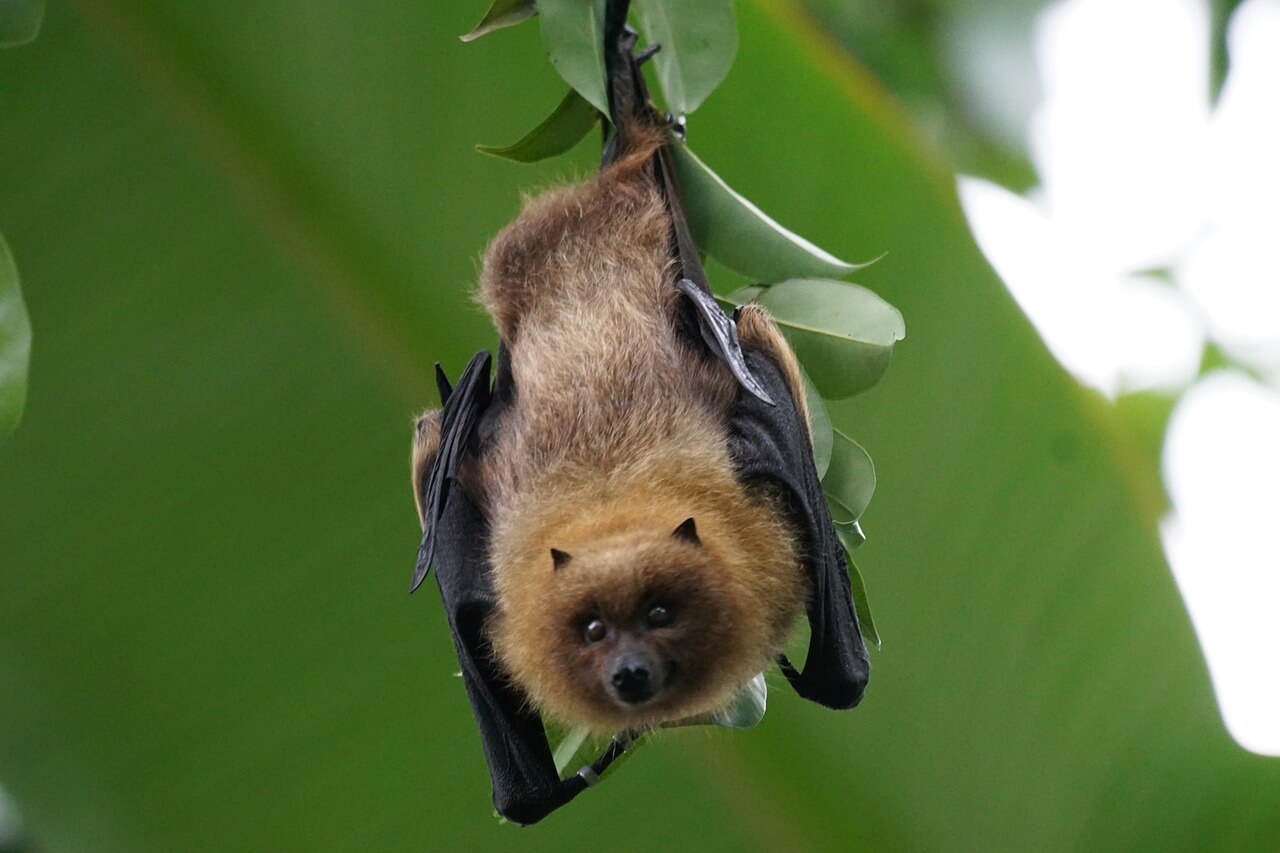
Of all the creatures in the natural world, few are as profoundly misunderstood — or as spiritually rich — as the bat. In Western culture, the bat has long been cast as a creature of darkness, fear, and ill omen. But strip away centuries of superstition and Gothic mythology, and what remains is one of the most extraordinary animals on earth: the only mammal capable of true flight, a master navigator through absolute darkness, a highly social and deeply intelligent being that has survived virtually unchanged for over 50 million years. In the language of spirit animals, the bat carries wisdom of exceptional depth and courage.
The bat spirit animal arrives with a message that is rarely comfortable but always necessary: it is time to go into the dark. Not the darkness of despair or destruction, but the sacred darkness of deep transformation — the inner territory where old identities dissolve, where what we have outgrown falls away, and where the self that was always waiting to emerge finally finds the space and the silence in which to be born. This is shadow work in its most honest and most ancient form, and the bat has been its guide and symbol across cultures for thousands of years.
The bat spirit animal also brings the gifts of intuition, inner vision, and the extraordinary ability to navigate by means that go beyond ordinary sight. Just as the bat moves through complete darkness by echolocation — sensing the world through sound, through vibration, through a perception that has no need of light — those aligned with the bat totem are being invited to develop and trust the perceptual gifts that exist beyond the rational mind. The bat knows the way through the dark. And in its company, so do you.
Bat Spirit Animal Meaning
The Bat Spirit Animal is among the most complex and multi-layered totems in the entire spiritual tradition. Its meanings span the full spectrum of the spiritual journey: death and rebirth, shadow and light, fear and illumination, community and solitude. Understanding the bat as a spirit animal is to understand that true spiritual growth rarely happens in the comfortable and the familiar — that the deepest wisdom is found precisely in the places we would least choose to enter, and that the darkness, approached with courage and with trust, is not the absence of the divine but one of its most profound faces.
Historical Significance
The bat’s relationship with human spiritual life is ancient, global, and far more nuanced than modern Western culture suggests. Across thousands of years, civilizations from the Americas to Asia, from Africa to Europe, recognized in the bat a creature uniquely positioned at the boundary between worlds — between night and day, between flight and ground, between the physical and the spiritual, between death and life. This threshold quality gave the bat an enduring place in the ceremonial and mythological life of cultures that understood the crossing of boundaries as the essential spiritual act.
In Mesoamerica, the bat held a position of extraordinary sacred importance. The ancient Maya worshipped Camazotz, the Death Bat god, whose name translates to “death bat” and who presided over the underworld, sacrifice, night, and the renewal that follows death. Far from being a force of pure evil, Camazotz embodied the Mayan understanding that death is not an ending but a transformation — that the darkness of the underworld is the womb from which all new life emerges. Mayan shamans were said to be able to shapeshift into bats, using the creature’s liminal nature to travel between the world of the living and the world of the spirits.
The Zapotec civilization of ancient Mexico held the bat as such a sacred figure that their earliest known deity, dating back more than 2,500 years, was a bat god associated with corn, fertility, and the mysteries of death and rebirth. The caves the Zapotec considered sacred — the Sacred Cenotes, dark and filled with the sound of wings — were understood as the literal doorways to the underworld, the place where bats originated and through which the soul passed on its journey.
Cultural Representation
The bat’s spiritual significance is striking in its global reach. In Chinese culture, the bat is one of the most auspicious symbols in the entire visual vocabulary of good fortune. The Chinese word for bat, fú (蝠), shares its pronunciation with the word for good fortune and happiness — a linguistic alignment that elevated the bat to one of the most beloved symbols of prosperity and blessing in Chinese tradition. Five bats depicted together, known as the Wufu or Five Blessings, represent the five great gifts of a well-lived life: longevity, wealth, health, virtue, and a peaceful death. Images of five bats surrounding the character for longevity appear throughout Chinese art, textiles, and architecture as a prayer for the fullness of human flourishing.
In Japanese tradition, the bat carries similar associations with good fortune, happiness, and intuitive wisdom. Bat imagery was incorporated into samurai armor and crests — a deliberate invocation of the bat’s legendary navigational gifts, its ability to move with perfect confidence through absolute darkness, as a talisman for the warrior facing the unknown.
In the Celtic tradition of the British Isles, the bat was a deeply liminal creature — one that existed at the margins, emerging precisely at the threshold hour of dusk when the boundary between the world of the living and the world of the spirits was believed to be at its thinnest. Celtic spiritual tradition honored the threshold above all else, and the bat, appearing faithfully at this sacred borderline every evening, was understood as a creature of the in-between, a natural guide for those crossing from one state of being into another.
Related: How to Find Your Spirit Animal
Common Interpretations in Dreams
Dreaming of a bat is one of the more striking and significant dream experiences, and its interpretation depends greatly on the emotional tone of the encounter and the context in which the bat appears. In most spiritual traditions, the bat in dreams is not a negative omen but a powerful messenger — a signal from the deeper self that something important is ready to be seen, released, or transformed.
A bat flying freely in darkness most often signals that the dreamer possesses — or urgently needs to develop — the capacity to navigate a difficult or uncertain situation by means of inner guidance rather than external certainty. The darkness is not the threat; the bat’s ease within it is the message. A bat hanging upside down is a rich symbol of perspective reversal — an invitation to look at a situation from an entirely different angle, to turn one’s understanding of a problem on its head and discover what becomes visible from that new vantage point.
A swarm of bats emerging from a cave is frequently interpreted as a powerful symbol of emergence — of something that has been held in the unconscious finally finding its way into the light. A single bat approaching the dreamer directly may be a specific spiritual message or a call to pay close attention to a particular shadow quality that is asking to be acknowledged and integrated.
Personal and Emotional Connection
Those who feel personally connected to the bat spirit animal tend to be individuals who are, at their core, profoundly intuitive — people who often know things they cannot rationally explain, who pick up on the subtleties of emotional energy in a room before a word has been spoken, and who navigate complex social and spiritual terrain with a perceptual precision that can seem almost uncanny to those around them. This gift is the bat’s echolocation translated into human terms: the ability to perceive clearly in the dark, to find the way through by means of an inner sense that has no need of visible light.
People aligned with the bat totem also tend to be remarkably comfortable with complexity and ambiguity. The bat, as the only mammal that truly flies, belongs fully to neither the world of the ground nor the world of the air. It is genuinely both — and in that both-ness, it embodies the kind of fluid, non-binary intelligence that refuses easy categorization and finds its deepest truth precisely in the creative tension of the in-between.
Related: What is my spirit animal by birthday
Spiritual and Emotional Significance
The Bat Spirit Animal carries what may be the most demanding and ultimately most rewarding of all spirit animal teachings: the invitation into shadow work — the conscious, courageous process of turning toward the parts of the self that have been hidden in darkness, whether through fear, shame, or simple unawareness, and integrating them into a more complete and honest wholeness. This is the work that the bat has guided shamans, initiates, and seekers through for millennia. It is not comfortable work. But it is, in the most literal sense, transformative.
Personal Growth and Development
The bat spirit animal demands something rare and precious from those it chooses: complete commitment to authentic growth. It has no patience for surface-level spirituality, for the performance of transformation while the deeper patterns remain untouched. The bat’s medicine asks its person to be willing to go into the dark — into the places within the self where the stories that no longer serve, the identities that have grown too small, the wounds that have quietly shaped everything, actually live.
In Native American shamanic tradition, the bat was specifically associated with the concept of initiatory death — the ceremonial and spiritual process by which the old self is symbolically released so that a new, more awakened self can emerge. The Mayan and Toltec shamans who underwent this initiation were not pretending to die; they were experiencing the actual dissolution of a previous identity, the genuine surrender of an ego structure that had served its purpose and was now ready to be released. The bat was the guide and guardian of this passage. And for those aligned with the bat totem in the modern world, this same initiatory energy is the core of its medicine.
Healing and Protection
The bat’s healing gifts are intimately connected to its shadow work teachings. In many traditions, illness — physical, emotional, and spiritual — is understood as the accumulation of what has not been processed, acknowledged, or released. The toxic environment that the bat cannot survive in is a direct metaphor for the inner environment of suppressed emotion, unexamined belief, and unresolved experience. Bat medicine, in this context, is a deep and thorough inner cleansing — not the gentle cleansing of the frog’s flowing water, but the radical clearing that happens when you are willing to go into the darkest corner of your own inner space and let the light of honest awareness into what lives there.
Protectively, the bat is a guardian of extraordinary sensitivity. Its echolocation — the ability to emit a signal and read the world from its returning echo — is a perfect model for the kind of protective energetic awareness that bat medicine cultivates in its person. Those aligned with the bat totem develop a finely tuned sensitivity to the energies of their environment: to who can be trusted, to where danger is present beneath a pleasant surface, to what is genuine and what is performance. This perceptual gift, fully developed, makes the bat totem person one of the most reliably accurate readers of situation and character in any circle.
Bat Totem and Power Animal
As a totem animal, the bat represents the qualities of those who are called to walk the path less traveled — the inner path, the path through darkness, the path that requires not the brightness of external validation but the steady, reliable light of one’s own deep knowing. Those who carry the bat as their primary totem are rarely the most visible or the most immediately understood members of their communities. But they are often the most perceptive, the most genuinely transformed, and the most quietly powerful.
Finding Your Bat Totem
Recognizing the bat as your totem animal often involves a lifelong pattern of deep inner questioning, an instinctive orientation toward the hidden and the unseen, and a comfort — or at least a familiarity — with darkness in both its literal and metaphorical forms. Bat totem people are often those who have been through significant experiences of loss, dissolution, or radical change and who emerged from those experiences not merely surviving but genuinely, fundamentally altered in a way that oriented them toward greater wisdom and compassion.
Those drawn to the bat may also recognize in themselves a quality of being misunderstood by others — a sense that their perception, their intelligence, or their way of moving through the world is not immediately legible to people who rely more heavily on surface appearances and conventional frameworks. The bat, so long maligned and misrepresented in Western culture, is a particularly resonant totem for those who have felt the specific pain of being defined by others’ fear rather than recognized for their actual nature and gifts.
Embracing the Bat Energy
To embrace the energy of the bat spirit is to make a genuine commitment to facing what you would rather not face — with the understanding that what waits on the other side of that honest reckoning is not further darkness but genuine freedom. The bat does not avoid the cave. The cave is its home, its sanctuary, and the place from which it launches into the night sky. Embracing bat energy means learning to feel the same way about your own inner depths: not as a territory to be avoided, but as the ground of your most authentic power.
Embracing the bat also means cultivating and honoring your intuition as the primary navigational tool it is. Where others may wait for certainty, for visible evidence, for rational proof before they act, bat medicine invites its person to trust the returning echo of their inner perception — to learn the language of their own deeper knowing and to act from that knowing with the same fluid confidence with which a bat navigates the absolute dark.
Common Bat Symbols in Dreams
Bats in dreams are among the most symbolically potent and spiritually significant visions available to the dreamer. Their appearance almost always signals that something important is moving in the dreamer’s life — some quality of awareness, some long-held pattern, some emerging truth — that is asking to be acknowledged and integrated.
Positive Aspects:
- Navigating the dark: A bat flying with ease and confidence through darkness is one of the most encouraging dream symbols — a direct message that you have the gifts and the inner resources to navigate the uncertain or challenging passage you are currently in.
- Initiation: A bat appearing at the entrance to a cave or flying out of one often signals an initiatory threshold — the beginning of a significant transformation, a new phase of life, or a deepening of spiritual awareness.
- Hidden gifts: A bat appearing and looking directly at the dreamer frequently carries the message that a dormant gift, skill, or quality of perception within you is ready to be recognized and brought into active use.
- Community and belonging: Dreaming of a colony of bats at rest together speaks to the value of your bonds with others and a reminder that your transformation does not have to happen in isolation — that you are held and supported, even in the darkest passages.
Negative Aspects:
- Avoidance: A bat that is agitated or fleeing may reflect the dreamer’s own resistance to looking at something that needs honest attention — the inner equivalent of something stirring in the dark that has not yet been faced.
- Confusion: A bat flying erratically or colliding with things may signal that one’s intuition or inner compass is currently being drowned out by noise — too many external voices, too much mental chatter — and that a period of quiet and inner listening is urgently needed.
- Fear of change: Dreaming of a bat in a context that produces fear most often reflects not actual danger but the dreamer’s anxiety about the transformation that the bat represents — a sign that the mind is resisting what the soul already knows is necessary.
Specific Dream Scenarios:
- A black bat: Shadow work is calling — there is something within the unconscious that is ready, and asking, to be brought into the light of conscious awareness.
- A white bat: An exceptionally rare and powerful dream symbol, associated in many traditions with the presence of a spiritual guide, an ancestor’s blessing, or an imminent experience of spiritual illumination.
- A bat landing on you: A direct message — this spirit animal has chosen you, and the transformation it carries is personal, immediate, and intentional.
- A bat flying in daylight: The extraordinary image of the bat in light suggests the integration of shadow and light — a sign that you are moving toward a genuine wholeness that can hold both the darkness and the brightness of your full nature.
- Bats in your home: A powerful symbol of transformation entering your most intimate and personal sphere — your home life, your family, your sense of self — asking for attention and honest reckoning.
Intuition and Visions:
Encountering a bat during meditation or in a spontaneous waking vision is one of the more striking spiritual experiences available to the seeker. It is most often understood as a direct call from the deeper self — an invitation to stop relying on what can be seen and to develop, trust, and follow the inner perceptual intelligence that has always been there, waiting to be used.
Integrating with the Natural World
Understanding the bat spirit animal draws us into a profound contemplation of darkness as a spiritual condition — not the darkness of evil or despair, but the sacred darkness of the unknown, the unconscious, the cave of inner silence from which all genuine transformation emerges. In the natural world, the bat’s relationship with darkness is not fearful but functional. The bat does not merely tolerate the dark; it requires it. The darkness is the element in which the bat’s most extraordinary gifts — its echolocation, its navigation, its prey-capture — operate at their highest precision. For those working with bat medicine, this is the central spiritual instruction: the darkness is not the enemy. It is the very medium in which your most extraordinary perceptual gifts become available.
Living in Harmony
The bat’s ecological role is one of the most important and least recognized in the natural world. A single bat can consume thousands of insects in a single night, providing a service to agriculture and ecosystem health that is quite literally incalculable. This quality of hidden, essential service — the work that happens in the dark and that most people never see or credit — is deeply characteristic of the bat totem person. Those who carry bat medicine often do their most important work out of the spotlight, in the quiet interior spaces where the real transformations happen, and they bring a quality of attention and commitment to that work that is extraordinary precisely because it asks for no recognition.
Lessons from Echolocation
The bat’s echolocation is among the most spiritually instructive abilities in the animal kingdom. The bat does not see the world; it hears it — or more precisely, it emits a signal and reads the world from what returns. This is a direct metaphor for the kind of intuitive perception that the bat spirit animal cultivates in its person: the ability to send out the signal of genuine inquiry — honest, courageous, without predetermined conclusion — and to read the truth of a situation from what resonates back. Those who learn to trust this perceptual mode find that it is, over time, far more accurate than any amount of rational analysis. The bat knows this. And in its medicine, it shares this knowing.
Influence of Bat Spirit in Various Cultures
The bat’s presence in the world’s spiritual traditions is as wide-ranging as it is complex. From the sacred caves of ancient Mesoamerica to the imperial courts of China, from the shamanic traditions of the American Southwest to the dusk-lit hedgerows of Celtic Britain, the bat has been recognized as a creature of extraordinary spiritual power — a guide through the dark, a herald of transformation, and a bridge between the world of the visible and the world of the unseen.
Native American Lore
In Native American traditions, the bat’s meaning is richly varied across tribes, reflecting the full complexity of its nature. For the Navajo, the bat — known as Djabani — is a sacred intermediary, a divine messenger of the night who carries offerings between the human world and the world of the spirits and who serves as the guardian of the eastern sky. In one Navajo story, when the goddess Changing Woman sought to present an offering to the god of winter thunder and all the other animals were too afraid to help, the bat stepped forward with quiet humility and served as the sacred courier. For the Navajo, this is the bat’s deepest identity: the reliable guide who moves without fear where others cannot go.
For the Zuni people of the American Southwest, the bat is associated with rain and cleansing — a link between the bat’s nocturnal world and the purifying, life-renewing power of water that falls in darkness. Among the Ojibwe, the bat is a guide and helper, particularly for those engaged in vision work and the navigation of the dream world. For the Apache, Creek, and Cherokee, the bat is a trickster — a figure whose role is to disrupt the expected, to reveal what is hidden beneath appearances, and to shock the ordinary mind into a new and more awake way of seeing.
Among the Maya of Mesoamerica, bat symbolism reached its greatest cultural elaboration. Camazotz, the Death Bat god, was not a figure of pure destruction but of the cyclical dissolution and renewal that governs all of existence. The bat caves of the Maya — the Sacred Cenotes — were not merely geographical features but sacred portals, the literal entrances to the underworld, and the places where the most profound initiatory ceremonies of transformation were conducted.
Bat in World Mythologies
The bat’s mythological footprint extends across every inhabited continent. In ancient China, the bat’s identification with good fortune was so strong and so embedded in the visual culture that the image of five bats — the Five Blessings — became one of the most common and universally recognized symbols of the highest human aspirations, appearing on everything from imperial porcelain to embroidered silk to carved jade.
In the mythology of Samoa, the bat is connected to the goddess Leutogi, a princess who protected and healed an injured baby bat against the will of her powerful husband. The bats, in gratitude, later came to her defense in a moment of mortal danger, surrounding her with their wings and protecting her from those who sought to harm her. This story elevates the bat to a symbol of reciprocal loyalty — the understanding that compassion offered in vulnerability is repaid in the hour of greatest need.
In Aboriginal Australian traditions of the Kulin People, the bat figures in creation mythology as a creature of unique status — neither fully of one category nor another, existing in the creative tension of the in-between and bringing that quality of generative ambiguity to the stories of how the world came to be. In ancient Sumerian mythology, winged spirits associated with bats — the edimmu — were understood as the restless souls of those who had not been properly honored in death, a tradition that speaks to the bat’s enduring connection with the passage between life and the spirit world, and with the sacred responsibility to honor those who have crossed that threshold.
Working with Bat Medicine
Bat Medicine is the medicine of sacred darkness — the willingness to enter the unknown with trust rather than fear, and to discover in the depths of that unknown the most authentic and most luminous version of the self. It is demanding medicine. It does not permit avoidance or comfortable half-measures. But for those who are genuinely ready to receive it, it offers gifts of extraordinary depth: a quality of inner knowing that does not waver in the dark, a capacity for transformation that renews itself again and again, and a perceptual precision that, once developed, becomes one of the most reliable navigational tools available to the human soul.
- Shadow Work: Bat medicine calls its person to the honest, courageous work of meeting what has been hidden in the inner dark — the suppressed emotions, the unexamined beliefs, the aspects of self that have been disowned out of fear or shame. This is not punishment but liberation.
- Rebirth: The bat’s ceremonial association with death and rebirth is its most ancient teaching. Call on bat medicine when you are in the midst of a significant ending — of a relationship, an identity, a chapter of life — and need the trust and the courage to allow the old self to fully dissolve so that the new can emerge.
- Intuition: Invoke bat medicine when you need to trust and develop your inner perceptual gifts — when the rational mind has reached its limits and the situation calls for the deeper, more precise intelligence of genuine intuition.
- Inner Vision: Bat medicine cultivates the ability to see clearly in conditions of uncertainty, confusion, and apparent darkness. Work with this totem when you need clarity in a situation where the usual markers are not available.
- Transition: The bat is a guide for all of life’s threshold moments — the crossings between one state of being and another. Its medicine provides steadiness, orientation, and trust in the passages that most frighten us.
- Community: Despite their association with solitude and the dark, bats are profoundly social animals, roosting together in their thousands and raising their young collectively. Bat medicine reminds its person that even the deepest inner work is supported by genuine community.
| Aspect | Insights |
|---|---|
| Rebirth | The oldest and most universal bat teaching — the death of the old self and the emergence of the new |
| Shadow Work | The courageous encounter with what has been hidden, and the liberation that follows honest integration |
| Intuition | The bat's echolocation as a model for perceptual gifts that operate beyond ordinary sight |
| Inner Vision | The capacity to navigate darkness, uncertainty, and confusion with genuine inner clarity |
| Transition | A faithful and fearless guide through every threshold and crossing of the soul's journey |
| Sacred Darkness | The understanding that the dark is not the absence of the divine but one of its most profound faces |
Frequently Asked Questions
1. What does the bat spirit animal represent?
The bat spirit animal primarily represents rebirth, shadow work, intuition, and the courage to navigate transformation. It is one of the most powerful symbols of the soul’s willingness to enter the dark — not out of recklessness but out of spiritual trust — and to emerge from that darkness changed at the deepest level. It also carries significant associations with inner vision, the ability to perceive what others cannot see, and the extraordinary gifts that develop when we stop relying exclusively on what is visible to the outer eye.
2. What does it mean if the bat is my spirit animal?
If the bat is your spirit animal, you are likely a deeply intuitive and perceptive individual who has an instinctive relationship with the less visible dimensions of experience. You may have a gift for sensing what is beneath the surface of situations and people, for navigating complexity and ambiguity with an inner confidence that others find difficult to explain, and for undergoing genuine transformation — not once, but repeatedly across the course of your life. Your spirit animal is calling you to trust your inner knowing completely and to embrace, rather than avoid, the deep inner work that leads to authentic liberation.
3. What does it mean when you see a bat?
Seeing a bat — particularly at an unexpected moment, or in a way that draws your attention with unusual force — is widely understood as a significant spiritual signal. In most traditions that recognize the bat’s spiritual meaning, a bat sighting calls you to pay attention to what is transitioning or transforming in your life, to examine what may need to be released, and to trust your intuition in navigating whatever uncertainty currently surrounds you. In Chinese tradition, it is simply and joyfully a sign of incoming good fortune.
4. Is the bat a bad omen spiritually?
In most world spiritual traditions, no — the bat is not a bad omen but a powerful and ultimately positive guide. The Western association of the bat with evil and dark magic is a cultural overlay, rooted in medieval European superstition and Gothic literature, that does not reflect the bat’s actual spiritual significance across cultures. In China, Japan, and much of Asia, the bat is among the most auspicious symbols of good fortune available. In Native American tradition, it is a guide, healer, and sacred intermediary. The only genuine shadow in bat symbolism is the honest one: the bat’s appearance can signal that something difficult is asking for attention — but that is medicine, not misfortune.
5. What is the connection between the bat spirit animal and shadow work?
The bat’s association with shadow work is among its most significant and most consistent spiritual themes. Shadow work — the Jungian term for the process of consciously engaging with the aspects of the self that have been repressed or denied — is precisely what the bat has guided shamans and initiates through for millennia. The bat lives in the dark, navigates the dark without fear, and returns from the dark carrying the fruits of what it found there. For those working with bat medicine, this is the invitation: to enter the inner dark with the same trust and precision, to meet what lives there without flinching, and to return from that encounter with the expanded awareness and genuine freedom that only honest inner work can provide.
6. How do I connect with my bat spirit animal?
The most powerful way to connect with the bat spirit animal is through the practice of conscious inner inquiry — the willingness to sit quietly with your own depths and to allow what has been in the dark to gradually come into the light of your awareness. Meditation at dusk — the bat’s threshold hour — is a particularly potent practice. Visualize yourself at the entrance to a cave as the last light fades, feeling the air stir with wings as bats begin to emerge around you. Invite the bat to draw close and to show you what it carries. Journaling about what you have been avoiding, what patterns feel ready to end, and what truer version of yourself is waiting to emerge can also deepen this relationship. And if a bat appears to you in waking life — at dusk, in a cave, circling above you in the dark — pause, breathe, and ask: what in me is ready to be reborn?