
Tested by a Real User
Cacao Laboratory Review 2026
The Finest Ceremonial Cacao We've Tested
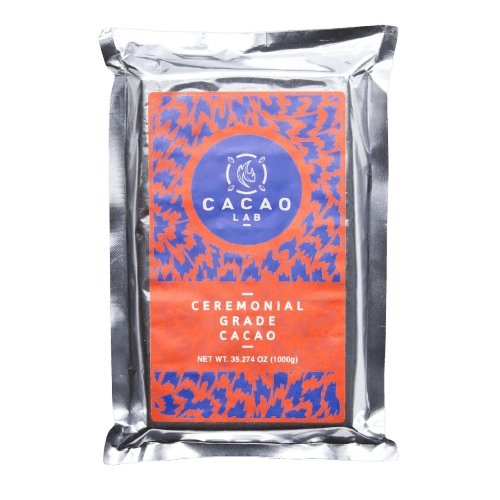
Cacao Laboratory's 100% Arriba Nacional is the gold standard of ceremonial cacao. Sourced directly from century-old heirloom trees in Ecuador's Manabí province, third-party tested by Eurofins, and backed by genuine direct-trade relationships, this is not just a product — it is a daily ritual in a block. If you are serious about ceremonial cacao, this is where the search ends.

*Get 10% discount with the code “ZENORZEN“
Who Is Cacao Laboratory?
Cacao Laboratory — Cacao Lab for short — is a New York-based social-good company founded by Argentine siblings Federico and Florencia Fridman. Their story begins in 2016, when Florencia travelled to Guatemala and had a transformational experience with ceremonial cacao that changed her relationship to food, ritual, and wellness. She brought that experience back to Federico in New York, and together they built something the ceremonial cacao space had been lacking: a brand with genuine farm relationships, a clear ethical philosophy, and the transparency to prove both.
Their physical home is a café and retail space at 295 Wall Street, Kingston, NY, where the community dimension of their brand — twice-weekly virtual cacao circles, in-person ceremonies, and educational programming — comes alive. But their real home is in the fields of Manabí, Ecuador, where Federico travels multiple times a year to work directly with the small family farms that grow their cacao.
The company is built around a word they use deliberately and repeatedly: laboratory. Not a clinical lab, but a place of experimentation — a living test of whether a business can operate with genuine equity, sustainability, and quality without sacrificing any of the three.
"Our intention is simply to work with a small network of farms, build personal relationships with the farmers, ensure quality by being on the ground with the farmers, and deliver the best possible product to you, the buyer." — Cacao Laboratory
Why Will You Love it:
⭐ Health Benefits
⭐ 100% USDA Organic certified
⭐ No additives, emulsifiers, or fillers
⭐ Third-party lab-tested for heavy metals
*Get 10% discount with the code “ZENORZEN“
100% Arriba Nacional Ceremonial Cacao — At a Glance
The flagship product is a 100% raw cacao paste made from Arriba Nacional heirloom beans sourced exclusively from the Manabí province of Ecuador. It arrives as a dense block (available as a single 2.2 lb / 1 kg pack, or in bulk at 22 lbs / 10 packs), ground from whole fermented and low-roasted cacao beans with nothing added and nothing removed. No emulsifiers. No fillers. No processing aids. Just cacao.
Origin
Manabí, Ecuador
Variety
Arriba Nacional (Heirloom)
Form
Block / Paste (100% cacao)
Certifications
USDA Organic, Direct Trade
Lab Testing
Eurofins (3rd party)
*Get 10% discount with the code “ZENORZEN“
✓ Pros
✓ Rare heirloom Arriba Nacional variety (only 1% of Ecuador's output)
✓ Genuine direct-trade with profit-sharing for farmers
✓ Third-party Eurofins lab-tested for heavy metals
✓ No additives, emulsifiers, or fillers
✓ 100% USDA Organic certified
✓ Low-roasted to preserve antioxidants and minerals
✓ Community access included with first purchase
✓ Exceptional floral, fruit-forward flavour profile
✓ Bulk option at significant per-unit savings
✗ Cons
✗ Premium price point ($100 for 1 kg)
✗ Requires preparation (not a ready-to-drink product)
✗ No returns accepted (food product)
Sourcing & Supply Chain: The Rarest Cacao in Ecuador
Arriba Nacional is the heirloom cacao variety native to Ecuador. Prized for its complex floral and fruit aromas, it represents less than 1% of Ecuador's total cacao output. The reason it is so scarce is not mysterious: it is being systematically replaced by GMO varieties that are higher-yielding, more disease-resistant, and far less interesting in flavour and nutritional profile. What remains of Arriba Nacional exists largely along the banks of the Portoviejo river in the Manabí province — and that is precisely where Cacao Laboratory works.
Cacao Lab's sourcing model is unusual even by premium standards. Federico Fridman travels to Ecuador at least twice per year during harvest, spending several months annually in the country. The company works with a network of small, family-held farms — not through a bean broker, not through a regional processing centre, but through direct, named relationships with individual farmers. Every farm grows its cacao within an agroforestry system: cacao and tropical fruits like banana and papaya grow alongside non-fruiting trees, flowers, and staple crops. This biodiversity maintains soil integrity while also imparting the distinctive flavour complexity that makes this cacao identifiable on the palate.
Beyond Fair Trade
Cacao Lab does not merely pay fair-trade prices. They operate with profit-sharing agreements with their farmers — a model they believe is unique in the ceremonial cacao space. Rather than paying more for wet cacao processed at a regional centre (a common industry practice that removes the farmer's ownership of their own product), they pay their farmers higher prices for the cacao the farmers ferment and dry themselves, on-premises, using traditional methods. They also employ a master fermenter who visits all farms in their network to maintain quality consistency.
The fermentation process itself is longer and more carefully managed than either commercial or most other ceremonial-grade producers. It is this extended, traditional fermentation that develops the distinctive floral and fruit notes the Arriba Nacional variety is celebrated for. Low-heat roasting follows, preserving the maximum antioxidant and mineral content in the final paste.
As far as we know, Cacao Laboratory is the only ceremonial cacao company that has profit-sharing agreements with its farmers — not just fair-trade pricing, but a genuine stake in the outcome.
Lab Testing: Third-Party Verified, Every Batch
One of the most significant trust signals in the ceremonial cacao space — and one that most brands conspicuously avoid — is independent third-party heavy metal testing. Cacao is a hyper-accumulator: it naturally draws minerals from the soil into the bean as it grows. In volcanic soils like those of Manabí, this includes cadmium. Lead, meanwhile, is typically a post-harvest atmospheric contaminant.
Cacao Laboratory submits every batch to Eurofins, one of the world's leading independent testing laboratories, for heavy metals analysis. Their Spring 2026 report — available publicly on their website — shows results well within international safety standards.
🔬 Eurofins Lab Results — Spring 2026
All results conform to EU limits. Both cadmium and lead test at approximately half the permitted EU thresholds.
Lead (Pb)
0.0409 ppm
≈ 1 minute in 47.5 years. Well below EU limit.
Cadmium (Cd)
~50% EU Limit
Soil-based. Naturally occurring in volcanic terroir.
Testing Lab
Eurofins
World's leading independent testing network.
Frequency
Every Batch
Not just annually — every production run tested.
A Note on California Prop 65
Some buyers encounter Prop 65 warnings in connection with cacao products and become concerned. It is worth understanding what these warnings actually mean. California's Proposition 65 sets thresholds 1,000 times lower than the level at which no observable effect has been found in humans — an intentionally ultra-conservative standard designed for mass-market products containing milk and sugar. Cacao Laboratory's product is 100% pure cacao solids, far more nutrient-dense by weight than standard chocolate, and its lab results remain well within safe international limits. The Prop 65 threshold is a regulatory artefact, not a genuine indicator of risk at the levels found in this product.
Health Benefits: What Whole Ceremonial Cacao Actually Does
The critical distinction between ceremonial-grade cacao paste and commercial cocoa powder is fat. Cocoa powder has been defatted — the naturally occurring cacao butter has been removed. Ceremonial cacao retains all of its natural fats, which serve as the vehicle for its fat-soluble compounds and give it a satiety and richness that defatted cocoa cannot replicate. Everything that follows is a consequence of whole, minimally processed cacao — not cocoa.
⚡
Theobromine Energy
Works on the cardiovascular system, not the brain, for a smooth, long-lasting lift without jitters or crash. Very low caffeine content.
🫐
Antioxidant Density
Over 40× the antioxidants of blueberries. Encourages nitric oxide release, widening blood vessels and increasing oxygen delivery.
🧲
Magnesium — #1 Plant Source
Among the highest-magnesium foods on the planet. Essential for muscle health, relaxation, and sleep regulation. Most of the West is deficient.
🩸
Best Vegan Iron Source
Whole cacao is the single best plant-based source of iron, supporting proper blood oxygenation and cellular health.
😊
Mood & Serotonin
High in l-tryptophan (serotonin precursor) and phenylethylamine (PEA) — the "love drug" that slows reuptake of dopamine and norepinephrine.
🌿
Anandamide — The Bliss Molecule
One of the only food sources of anandamide, plus compounds that inhibit its breakdown. Natural full-body calm without intoxication.
🧠
Neuroprotective
High antioxidant levels are strongly neuroprotective, shown to improve mental performance and reduce dementia risk over time.
❤️
Cardiovascular Health
Regular cacao consumption significantly decreases hypertensive disorders and reduces the risk of heart attack and stroke.
*Get 10% discount with the code “ZENORZEN“
Mood, Mindset & the Psychoactive Dimension
Cacao is not a psychedelic. It is a psychoactive — meaning it genuinely influences your mental and emotional state through biochemical mechanisms, not through any intoxicating effect. The three compounds most responsible for this are: l-tryptophan (the building block of serotonin), phenylethylamine (PEA) — known as the love drug, with concentrations in the brain linked to both falling in love and the runner's high — and anandamide, the endocannabinoid known as the bliss molecule. Together, these create a state of gentle alertness, emotional openness, and warmth that practitioners describe as ideal for meditation, creative work, or intentional social connection.
Taste & Experience: What to Expect in the Cup
Arriba Nacional cacao is, in the view of most serious practitioners, the most flavourful cacao variety in the world. The floral and fruit complexity it carries is a direct result of the old-growth terroir, the extended traditional fermentation, and the absence of processing shortcuts that would strip those notes away. Cacao Laboratory's tasting notes — tropical fruits and flowers — are not marketing language. They are an accurate description of what you taste.
Prepared at a meditation serving (28g in hot water, blended or frothed), the cup opens with a deep, earthy richness before the floral notes — jasmine-adjacent, not perfumed — emerge mid-palate. There is a fruit sweetness in the finish that is distinctly banana and stone fruit, which reflects the agroforestry growing environment. The mouthfeel is thick and satisfying due to the intact cacao butter, with none of the chalky, flat quality that characterises defatted cocoa drinks.
At a ceremonial serving (42g), the experience intensifies — the theobromine effect becomes noticeable as a warm, chest-centred expansiveness, and the aftertaste lingers in a way that invites reflection rather than reaching for the next sip immediately.
One important note: Cacao Laboratory does not add emulsifiers. This means the naturally occurring fats may separate and create white spots or a thin white layer — known as blooming — on the block. This is entirely normal and does not affect quality or nutritional value in any way.
Preparation Guide
How to Prepare Ceremonial Cacao
Unlike cocoa powder, ceremonial cacao paste has not been defatted and requires thorough blending with warm water. The preparation is simple once you have done it once, and the ritual of it — the chopping, the warming, the blending — is itself considered part of the ceremony by practitioners.
Meditation Serving
1 oz
28g · ~2 heaping tbsp
Ceremonial Serving
1.5 oz
42g · ~3 heaping tbsp
1. Heat your water
Bring filtered water to just under boiling — around 85–90°C (185–195°F). Quality of water genuinely matters here; filtered is preferred.
2. Chop or grate your cacao
Using a sharp knife, chop the block into rough pieces. If your cacao has been pre-granulated, skip this step. Finer pieces will blend more easily.
3. Combine and blend
Place chopped cacao in a blender, frother, or cup with your hot water. Blend thoroughly — at least 30 seconds in a blender — until fully emulsified and frothy. A milk frother works well for single servings.
4. Customise (optional)
Add a pinch of cayenne, cinnamon, or your choice of sweetener. Many practitioners enjoy it plain. Consider a superfood boost — ashwagandha, lion's mane, or reishi are popular additions.
5. Set an intention
This is the ceremonial element. Before drinking, take a moment with your cup — set an intention for the session. Whether you are meditating, journaling, working creatively, or simply beginning your day, the practice of intention transforms the drink into a ritual.
Is Cacao Laboratory Worth the Price?
At $100 for 2.2 lbs (1 kg), Cacao Laboratory sits at the premium end of the ceremonial cacao market. Whether that price is justified depends entirely on what you are comparing it to and what you value in the product.
Arriba Nacional · Single Pack (2.2 lbs / 1 kg)
| Price per kilogram | $100.00 |
|---|---|
| Servings (meditation, 28g) | ~35 servings |
| Cost per meditation serving | ~$2.85 |
| Servings (ceremonial, 42g) | ~23 servings |
| Cost per ceremonial serving | ~$4.35 |
| Bulk pack (10 × 2.2 lbs = 22 lbs) | $700 (~$70/kg) |
| Bulk saving per kg | 30% vs. single pack |
| Free US shipping threshold | Orders over $99 |
At approximately $2.85 per meditation serving, this is cheaper than most speciality coffees and far cheaper than most wellness supplements of comparable quality. For anyone replacing a daily coffee habit — which many practitioners do — the cost comparison is straightforwardly favourable. The bulk option at $700 for 10 kg brings the per-kg cost down to $70, making it the obvious choice for daily users.
The premium price is justified by what it actually represents: heirloom variety beans that constitute 1% of Ecuadorian cacao output, personally supervised fermentation, third-party Eurofins lab testing on every batch, above-fair-trade farmer compensation with profit sharing, and USDA organic certification. There are cheaper ceremonial cacaos on the market. There are none we have found at this quality level.
How Cacao Laboratory Compares
The ceremonial cacao market has grown significantly, and with it the number of brands making "ceremonial-grade" claims. Below we compare Cacao Laboratory's Arriba Nacional against the key criteria that separate genuine ceremonial-grade products from those that borrow the label.
| Feature | Cacao Laboratory | Typical Premium Brand | Budget Brand |
|---|---|---|---|
| Heirloom variety | ✓ Arriba Nacional | Varies | ✗ Often commercial |
| Direct farm relationships | ✓ Personal + on-site visits | Sometimes | ✗ Broker-sourced |
| 3rd-party lab testing | ✓ Eurofins, every batch | Rarely | ✗ Not typical |
| Profit-sharing with farmers | ✓ Yes | ✗ No | ✗ No |
| USDA Organic certified | ✓ | Sometimes | ✗ Rarely |
| No emulsifiers / additives | ✓ 100% pure paste | Usually | Mixed |
| Community / ceremony access | ✓ Included with purchase | ✗ No | ✗ No |
| Price per kg | $100 (single) / $70 (bulk) | $60–$90 | $30–$50 |
Who Should Buy Cacao Laboratory Ceremonial Cacao?
This is the right choice if you:
Are looking to establish a meaningful daily ritual — whether that is a morning replacement for coffee, a pre-meditation grounding practice, or a creative warm-up. Are willing to invest in a product whose quality, sourcing, and ethics can be verified rather than assumed. Already use ceremonial cacao and want to step up to the best available. Are interested in the community dimension — the twice-weekly virtual cacao circles that come with your first purchase are genuinely valuable for anyone new to the practice. Are buying in bulk and want the best possible per-serving cost at premium quality.
This may not be right if you:
Are looking for a quick, convenient hot chocolate. Are not prepared to engage with the preparation process — chopping, heating, blending. Are on a very tight budget and price is the primary consideration. Are based outside the US and concerned about shipping costs or international availability.
How We Review
Our Methodology
At Zenorzen, we evaluate ceremonial cacao products using a structured framework built around the criteria that actually matter to practitioners — not just taste, but the full lifecycle of the product from soil to cup. Our review process for Cacao Laboratory's Arriba Nacional involved examining the sourcing claims against publicly available documentation, reviewing the Eurofins third-party lab certificate, researching the Arriba Nacional heirloom variety and Manabí terroir, and contextualising the product against the broader ceremonial cacao market.
Review Criteria & Weighting
Our overall score is a weighted composite of six criteria, each scored out of 10:
Sourcing & Transparency
Weight: 25%
Score: 10 / 10
Purity & Lab Testing
Weight: 25%
Score: 9.5 / 10
Flavour & Experience
Weight: 20%
Score: 9.5 / 10
Health & Nutrition
Weight: 15%
Score: 9.0 / 10
Ethical Practices
Weight: 10%
Score: 10 / 10
Value for Money
Weight: 5%
Score: 8.2 / 10
Sourcing & Transparency examines the verifiability of origin claims, farm relationships, and supply chain documentation. Purity & Lab Testing assesses independent third-party test results, heavy metal levels relative to international standards, and testing frequency. Flavour & Experience evaluates the organoleptic profile, mouthfeel, complexity, and the felt quality of the psychoactive experience. Health & Nutrition considers nutrient density, minimal processing, retention of natural compounds, and absence of additives. Ethical Practices covers farmer compensation, environmental sustainability, and social impact. Value for Money weighs price against quality relative to the broader market.
Zenorzen.com has an affiliate relationship with Cacao Laboratory. This relationship does not influence our scoring or editorial opinions. Our methodology is applied consistently across all products we review.
*Get 10% discount with the code